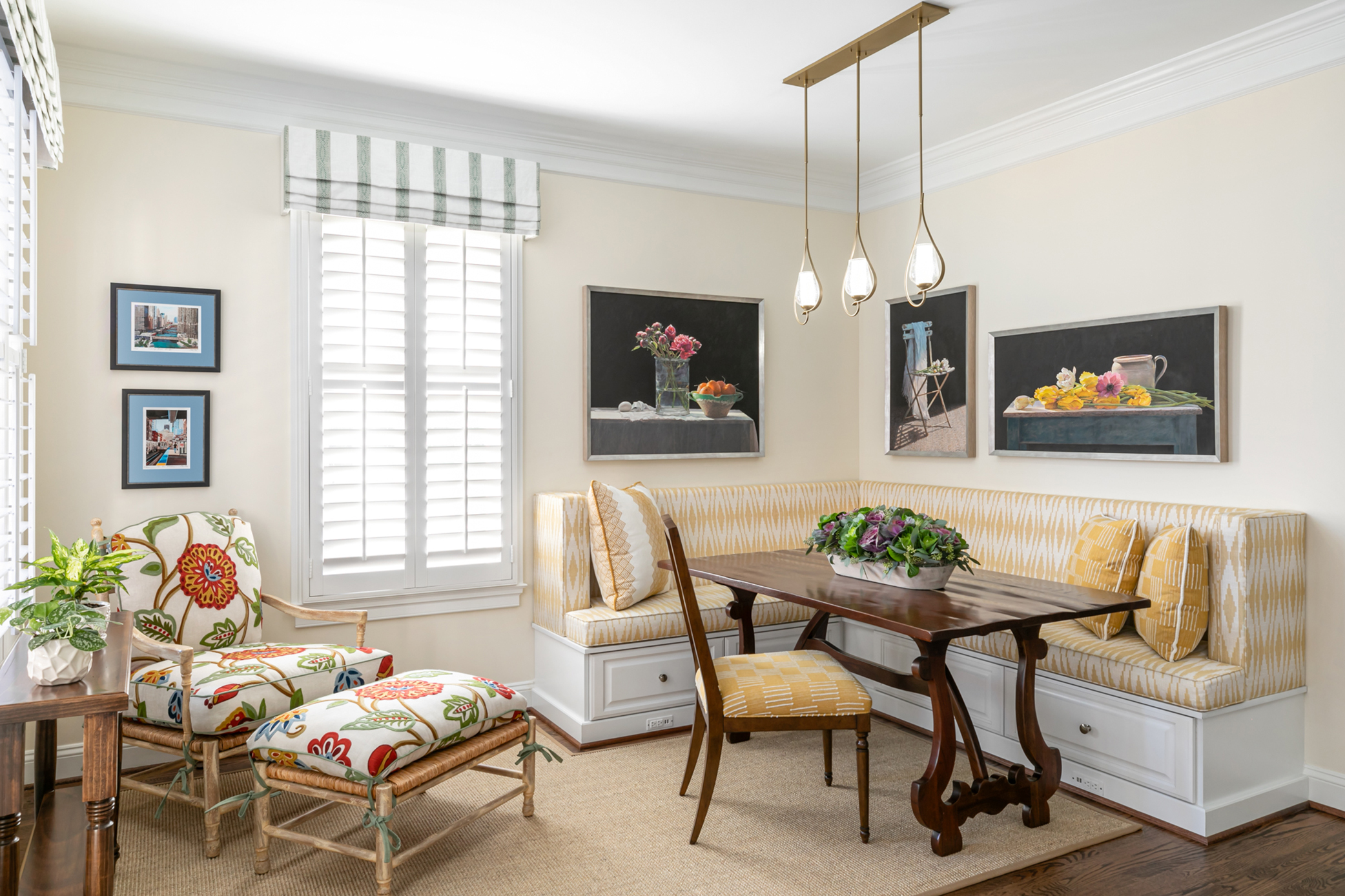
Brown gets a bad reputation. People hear “brown” and think of their grandmother’s den in 1987. Wood paneling, heavy drapes, a recliner that nobody was allowed to sit in.
But that’s not brown. That’s a time capsule. Real brown, used well, is one of the richest, most grounding colors you can bring into a home. It’s the color of leather that gets better with age, of walnut floors that glow in afternoon light, of coffee in a ceramic mug on a Sunday morning.
If your rooms feel cold, disconnected, or like they’re trying too hard, brown might be exactly what’s missing.
The Living Room: Start With Something You Want to Sink Into
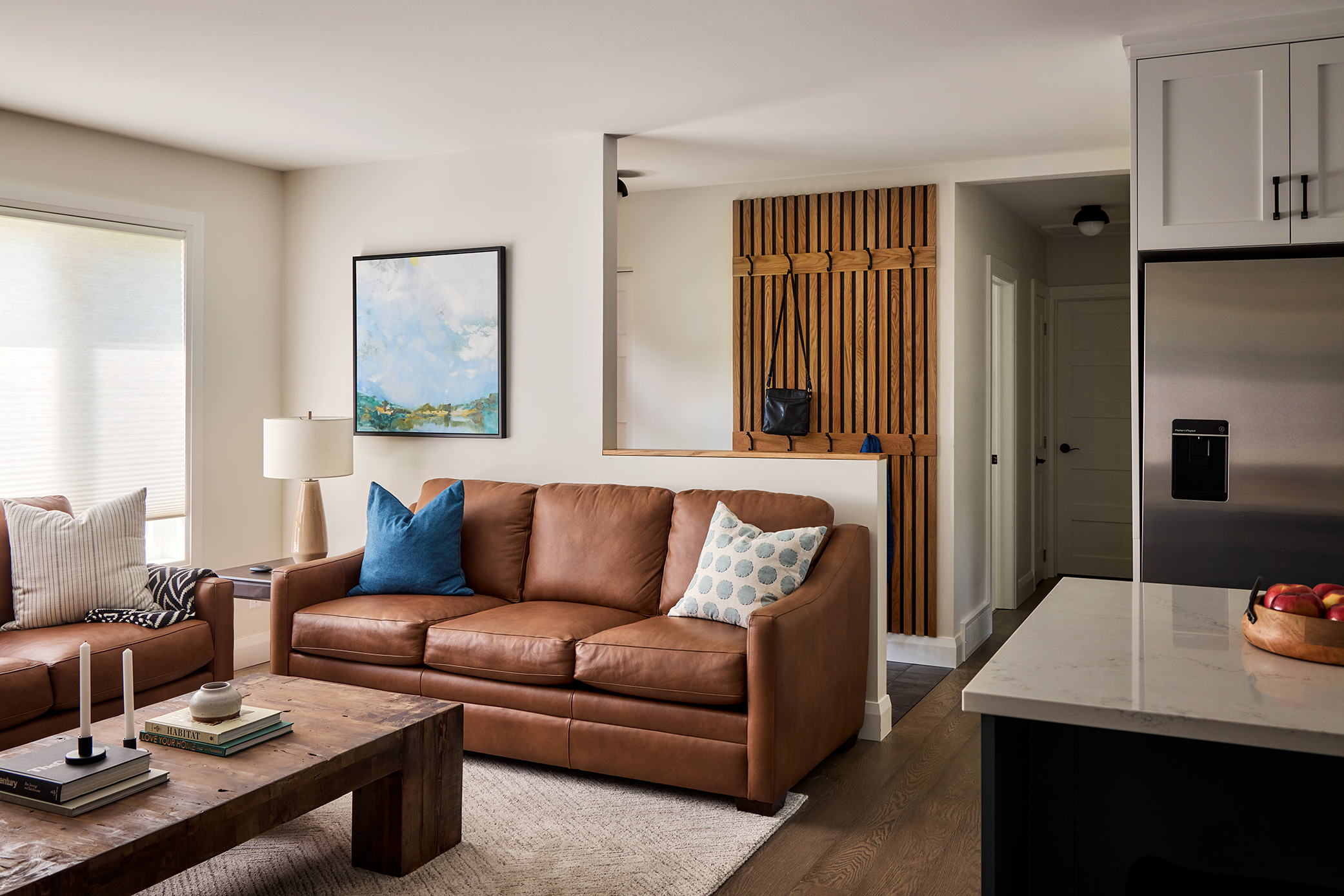
A cognac leather sofa changes a room the way a good pair of boots changes an outfit. It says “this room is lived in, and that’s the point.”
Take this open-concept space. White cabinets, quartz countertops, everything clean and bright. But the living room side felt sterile. The solution? Two deep cognac leather sofas and a chunky reclaimed wood coffee table. That was it. The kitchen stayed white and modern, and the living area suddenly had soul. The leather warmed up the whole space without competing with anything.
Brown as a Foundation, Not a Feature
Here’s the thing most people get wrong: they think of brown as an accent. A throw pillow here, a wooden tray there. That’s fine, but it’s playing small.
The rooms where brown really sings are the ones where it’s the foundation. A rich leather sectional anchoring a formal living room. Dark wood antiques mixed with lighter upholstery. A coffered ceiling with white beams over espresso-toned furniture below. Brown holds the room together and lets everything else breathe.
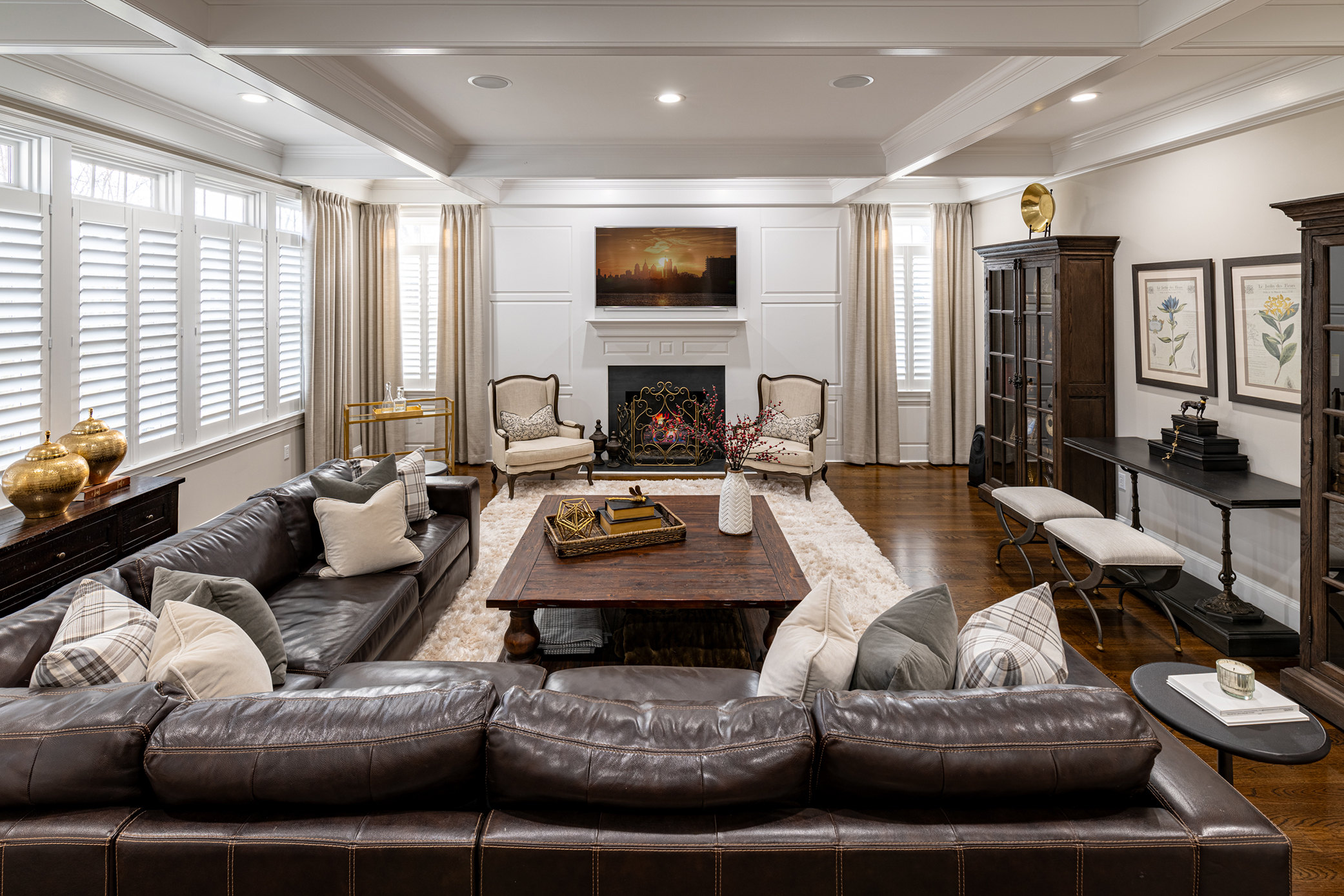
This living room is a perfect example. It was full of light gray furniture. Tasteful, sure. But it felt cold and forgettable. The designer added an oversized brown leather sectional, a pair of antique mahogany side tables, and gold accents throughout. The gray didn’t disappear. It became a backdrop. The brown gave the room gravity.
The Bedroom: Where Brown Becomes a Cocoon
Brown in the bedroom is almost cheating. It’s so naturally calming that half the work is done for you.
Think layered gold, cream, and espresso. A tufted headboard in a warm champagne fabric. Window treatments that puddle slightly on the floor in a soft mocha. Bedding that mixes textures: a sateen duvet, a woven throw, velvet accent pillows. The room doesn’t need a single bold color. The warmth comes from the depth of the brown tones themselves.

This master bedroom uses nothing but brown-family tones. No blue accent wall, no pop of green. Just warm golds fading into creams fading into deep espresso at the curtain hems. It’s the kind of room that makes you want to go to bed early. Not because you’re tired. Because the room feels that good.
The Kitchen: Brown Has Range
Brown in the kitchen doesn’t mean dark and heavy. A farmhouse kitchen with a butcher block island and natural wood open shelving feels completely different from a sleek espresso-cabinet kitchen with stainless steel. Same color family, opposite personalities.

This kitchen leaned all the way into the warmth. A thick butcher block island became the centerpiece, paired with creamy white cabinets and whimsical floral bar stools that nobody expected. The brown isn’t serious or stuffy here. It’s the warm handshake that makes the whole kitchen feel approachable. It’s the kind of space that makes you want to linger over coffee.
How to Use Brown Without Going Overboard
The biggest fear people have with brown is that it’ll make a room feel dark. Fair concern. Here’s how to avoid it:
Mix your browns. Don’t use one shade of brown everywhere. A walnut table next to a caramel leather chair next to a sand-colored rug creates movement. One flat brown is a mud puddle. Multiple browns are a landscape.
Pair it with something unexpected. Teal pillows on a brown sofa. A mustard throw on an espresso bed. A blush pink lampshade on a walnut nightstand. Brown is the straight man. It needs a comedic sidekick.
Let light in. Brown rooms need natural light or warm-toned artificial lighting. A brown room under cool LED bulbs looks dingy. Under warm light, it glows. This is non-negotiable.
Add metallics. Gold, brass, and copper were made for brown. They share the same warm undertone and elevate brown from casual to refined in seconds.
Brown Is Not Boring. Boring Is Boring.
The rooms that stick with you are the ones with warmth. Not the trendy ones. Not the ones that photographed perfectly for a magazine. The ones where you walked in and immediately felt at home.
Brown does that. It’s not flashy. It doesn’t need to be. It’s the color of comfort, and comfort never goes out of style.
If your home is missing that feeling, maybe it’s time to stop avoiding brown and start embracing it. Reach out for a free consultation and let’s find the right shade for your story.